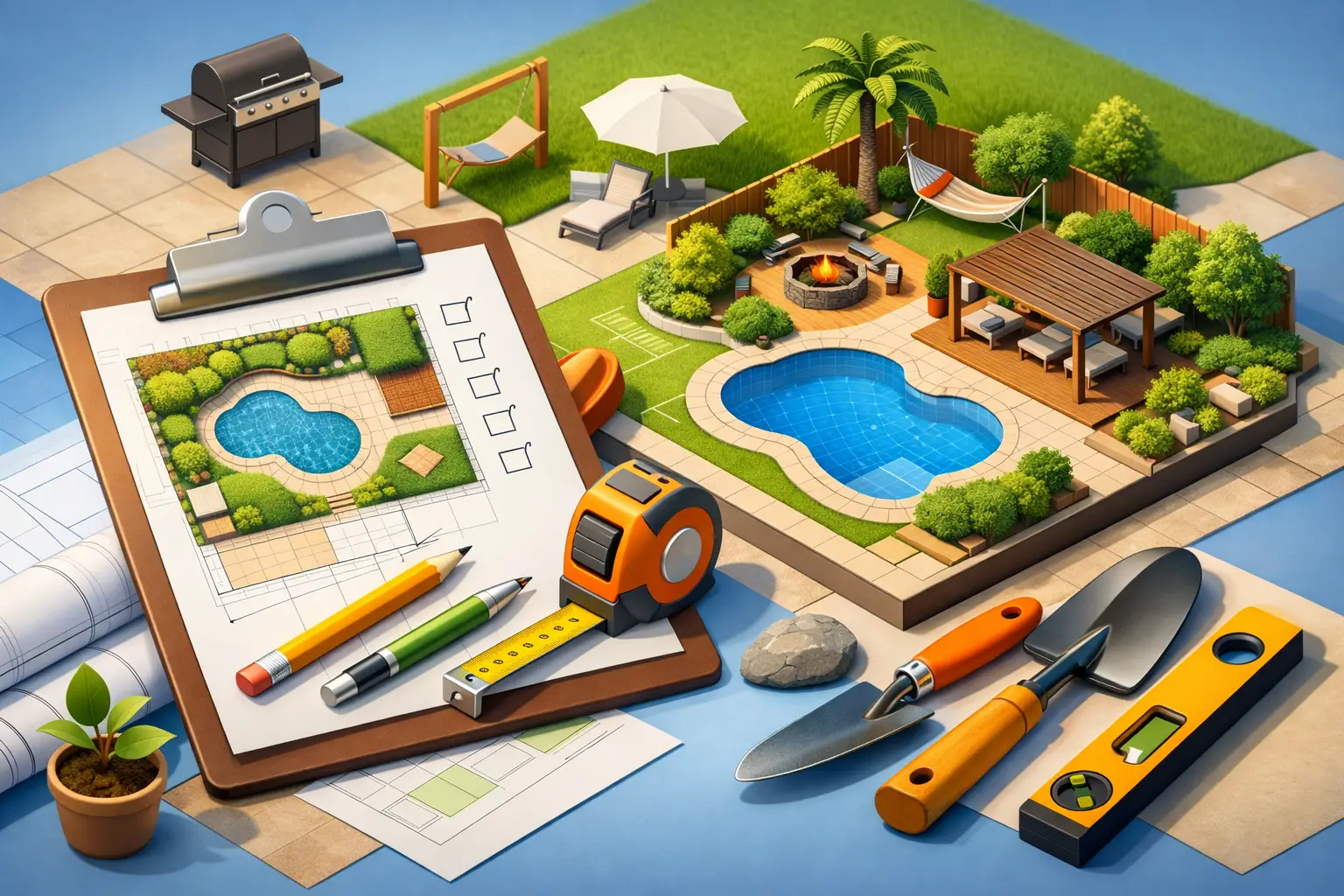
A great backyard rarely starts with a shovel. It starts with a clear DIY backyard planning checklist that prevents expensive do-overs, overcrowded planting beds, and patios that bake in the afternoon sun. Before you buy a single plant or paver, make sure the plan fits how you actually want to live outside.
DIY Backyard Planning Checklist: Know What You Have
Start by documenting the yard as it exists today. Homeowners often plan around the view from the back door, then discover a slope, drainage path, utility line, or mature tree that changes the whole layout. A few measurements and observations now can save days of rework later.
Measure the full yard, then measure the features that must stay: the house, deck, shed, fences, air-conditioning equipment, large trees, gates, and existing hardscape. Include the location of doors, windows, hose spigots, outlets, and downspouts. A simple sketch is enough at this stage, as long as the dimensions are accurate.
Next, track sun and water. Check the space in the morning, around midday, and late afternoon. Note where full sun lasts six or more hours, where shade holds, and where water collects after rain. Plant labels can be correct and still fail if the site has the wrong light or soil moisture.
Before digging, call 811 to have underground utility lines marked. Also check local setback rules, fence limits, permits, HOA requirements, and drainage regulations. A new raised bed is usually simple. A retaining wall, electrical run, major patio, or structure may require more planning and professional help.
Define the Job Your Backyard Needs to Do
A backyard can be a dining room, a play zone, a vegetable garden, a dog run, a quiet retreat, or all of the above. The trade-off is space. If every part of the yard is assigned a different purpose, the result can feel cramped and hard to maintain.
Write down your top three priorities in plain language. For example: "Seat six people for dinner," "grow herbs near the kitchen," and "give the dog a durable place to run." Those statements are more useful than a broad goal like "make the yard nicer" because they guide layout, materials, and budget decisions.
Think about frequency, too. A fire pit used twice a year should not take the best, largest part of the yard if your family eats outdoors every weekend. Put everyday functions closest to the house when possible. Keep occasional-use features farther out if that creates a better flow.
Plan zones, then connect them
Give each activity a defined zone, but do not box every zone in with a border. A patio can transition into a lawn, a planting bed can soften the edge of a seating area, and a stepping-stone path can lead to a garden without creating a maze.
Leave room for circulation. A path should lead somewhere useful, and people should be able to move around dining chairs without stepping into a bed or squeezing past a grill. If kids, pets, or guests use the space, test the routes on foot before construction begins.
Put Structure Before Plants
Hardscape and big layout moves should come before planting. Patios, paths, retaining edges, privacy screens, drainage improvements, and lighting locations establish the framework your plants will grow around. Installing them afterward can damage roots and force you to move plants that were just getting established.
This is also where realistic scale matters. A small bistro set needs less room than a six-seat dining table, but both need clearance to pull out chairs. A grill needs a stable, noncombustible setting with safe separation from structures and plant material. A fire feature needs additional clearance based on its type and local requirements.
Use painter's tape, a hose, stakes, or cardboard to mock up key footprints. Mark the future patio edge, bed line, or seating area and stand inside it. The layout may look generous on graph paper but feel tight once you account for furniture and walking space.
Drainage belongs in this stage, not at the end. Grade should direct water away from the house. Permeable surfaces, gravel areas, swales, rain gardens, and properly placed downspout extensions can help, but the right solution depends on soil, slope, rainfall, and local rules. If water repeatedly moves toward your foundation or a neighbor's property, get expert input before adding hardscape.
Choose Plants for Conditions and Maintenance
The most attractive plant palette is one that can handle your yard without constant intervention. Choose plants based on your USDA hardiness zone, sunlight, soil drainage, mature size, and the amount of maintenance you are willing to do. A plant that looks compact at the nursery may become a 5-foot-wide problem in two seasons.
Start with the largest plants and work down. Trees and large shrubs create shade, privacy, and structure, so their mature height and spread affect everything around them. Then add smaller shrubs, perennials, ornamental grasses, ground covers, and seasonal color. Repeat a few plant types rather than buying one of everything. Repetition makes a backyard feel intentional and is easier to maintain.
Native and regionally adapted plants are often smart choices because they are built for local weather patterns once established. That does not mean every native plant suits every site. Some spread aggressively, some prefer dry ground, and some need more room than a small bed can provide. Read the mature dimensions, not just the photo.
Plan irrigation before plants go in. Hand watering works for a few containers and a small new bed, but larger plantings benefit from a simple, targeted watering plan. Group plants with similar water needs together. It is more efficient and avoids overwatering drought-tolerant plants just to keep thirsty ones alive.
If a plant starts showing spots, yellowing, pests, or wilting later, diagnose the cause before treating it. Water stress, nutrient issues, insects, disease, and poor drainage can look similar at first. Backyard Buddy's Plant ER can help turn a plant photo into a more informed next step instead of a guess-and-spray routine.
Build a Budget With a Phased Plan
A DIY project does not have to happen all at once. In fact, phased work is often the better choice because it lets you invest in the systems that protect the project first: drainage, grading, irrigation, electrical planning, and major hardscape.
Create a budget for materials, delivery, tool rental, disposal, soil, mulch, plants, and a 10 to 15 percent contingency. Delivery fees and base materials are easy to overlook. So is the cost of moving excavated soil, removing old concrete, or bringing in extra soil to raise a bed.
A practical order of operations looks like this:
- Address drainage, utilities, grading, and permits first.
- Build permanent hardscape, edging, screens, and structures next.
- Install irrigation and lighting before new planting beds are filled.
- Add trees, shrubs, perennials, mulch, and containers last.
This order protects your investment. It also gives you flexibility. You can complete the patio this season and expand the planting plan next spring without tearing up finished work.
Test the Plan Before You Commit
Review your plan from inside the house as well as outside. Consider sightlines from the kitchen, living room, and primary windows. A privacy screen may solve one view while blocking natural light in another room. A new tree may provide welcome shade but limit future solar access or crowd a neighbor's fence line.
Then consider maintenance in January, July, and after a heavy storm. Can you reach the hose? Is there enough room for a mower, wheelbarrow, or gate access? Will leaves pile up in a drainage channel? Does the seating area have shade when you want to use it? The best plan is not the one that photographs well on installation day. It is the one that still works when the weather changes and life gets busy.
Your backyard does not need every feature at once. Make the first decisions carefully, build the foundation well, and leave room for the space to grow with you.