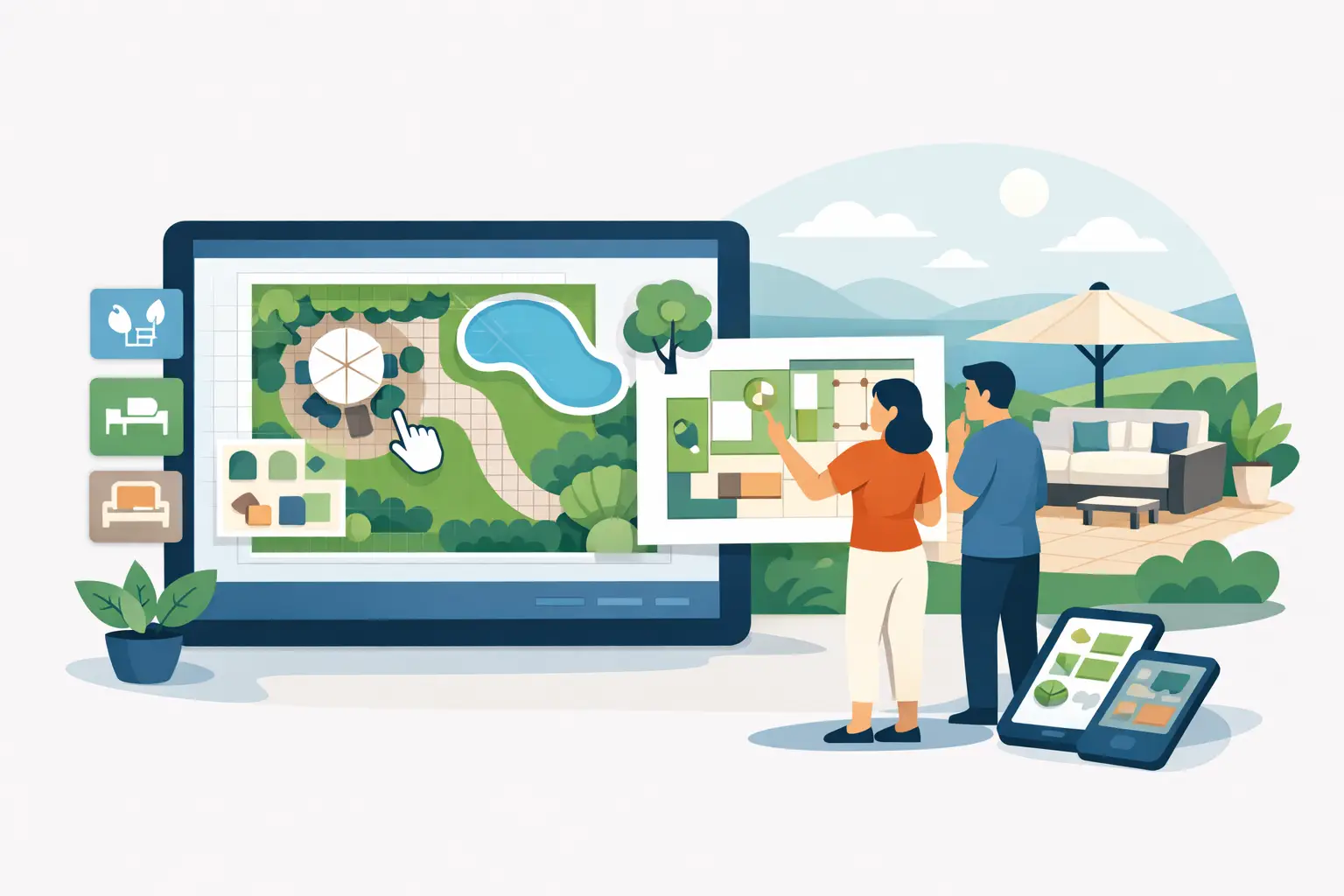
Most outdoor projects do not fail because the idea was bad. They fail because the layout looked better in your head than it did in the yard. A good outdoor space planning app closes that gap fast. It helps you see scale, test ideas before you spend money, and make decisions with more confidence whether you are refreshing a front bed, reworking a backyard, or planning a full outdoor living area.
That matters because outdoor changes are expensive to undo. A patio that crowds the yard, shrubs that outgrow the space, or a planting plan that ignores sun exposure can turn a fun project into a frustrating one. For homeowners and DIY landscapers, the value of planning is not abstract. It shows up in fewer bad purchases, cleaner layouts, and a space that works better day to day.
What an outdoor space planning app should actually do
At the most basic level, an outdoor space planning app should help you move from rough ideas to a usable plan. That means more than dragging a few icons onto a screen. The app should let you visualize layout options, compare placements, and make practical choices about how the space will function.
For most homeowners, the most useful tools are the ones that answer real project questions. Will a fire pit area leave enough room to walk comfortably? Does this planting bed balance the front of the house or make it look crowded? Are you choosing plants that fit the site, or just plants that look good in a photo? Good planning software should bring those answers closer before you start buying materials.
The strongest apps also reduce the guesswork around outdoor design. They help you think in layers - hardscape, planting, pathways, furniture, and circulation - instead of making isolated decisions that do not work together. That is where digital planning becomes more than a novelty. It becomes a filter for smarter choices.
Why homeowners are replacing sketchbooks with an outdoor space planning app
Sketches still have value. So do Pinterest boards, screenshots, and handwritten dimensions. But those tools break down once you need to make decisions that depend on proportion and fit. A sketch may tell you where you want a patio. It usually will not tell you whether there is enough room for chairs, planters, and a path that people can actually use.
An outdoor space planning app gives structure to the process. You can test one layout against another, rethink a bed shape, or see whether a larger entertaining zone makes the rest of the yard feel cramped. That speed matters. Homeowners often lose momentum not because they lack ideas, but because every next step feels uncertain.
There is also a budget angle. The earlier you catch a problem, the cheaper it is to fix. Moving a digital walkway costs nothing. Moving a built one costs time, labor, and money. The same is true for overplanting, poor spacing, and mismatched materials. Planning first is not about perfection. It is about making fewer expensive mistakes.
The features that make the biggest difference
Not every app is equally useful. Some are mostly visual. Others are stronger on plant selection, site analysis, or layout support. The right choice depends on the kind of project you are tackling.
If you are focused on design, visualization tools matter most. You want an app that helps you picture how pieces fit together in the actual space, not just in a generic mockup. Being able to experiment with layouts is what turns a vague idea into a plan you can trust.
If planting is a major part of the project, plant guidance becomes more important. That includes recommendations that account for conditions like sun exposure, spacing, and likely growth. A yard may look polished on day one and feel overcrowded by year three if those factors are ignored.
If you are managing ongoing yard issues, diagnostic features can be just as valuable as design tools. A planning app that also helps identify plant problems saves time and keeps the whole project connected. You are not just placing plants. You are maintaining a healthier outdoor space over time.
This is where an app backed by real landscape experience stands out. Backyard Buddy, for example, brings AI together with decades of hands-on landscaping knowledge, which is a useful combination for homeowners who want quick guidance without sacrificing credibility.
Planning better layouts, not just prettier ones
A lot of people start with appearance. That makes sense. You want the yard to look better. But the most successful outdoor spaces are planned around use first.
Think about how the space needs to perform. A family backyard may need open movement, durable planting areas, and a clear separation between play space and seating. A front yard may be more about curb appeal, structure, and simple maintenance. A small side yard might need storage, screening, and a path that does not feel like an afterthought.
This is where planning tools are especially helpful. They make it easier to test function before aesthetics lock you in. You can see whether a dining area is too far from the house, whether a pathway cuts awkwardly through the yard, or whether plant beds are taking up space you actually need for movement.
The trade-off is that digital planning can sometimes make every option look equally possible. Real yards still have constraints. Grade changes, drainage, existing trees, irrigation, and local climate all affect what should happen next. The best app helps you think clearly, but it does not replace common sense or site awareness.
Choosing plants with fewer regrets
Plant buying is where many outdoor projects go sideways. It is easy to choose based on color or first impression. It is harder to judge mature size, maintenance needs, and whether the plant fits the location.
A strong outdoor planning tool helps narrow those choices. Instead of asking, "What looks good?" you can ask better questions. What handles this amount of sun? What works near a walkway without swallowing it later? What gives me structure year-round without constant trimming?
That shift matters. Plants are not decor in the same way furniture is. They grow, spread, decline, and react to stress. A smart app should help homeowners make choices that hold up beyond the first season.
This is especially useful for newer gardeners who want expert guidance without hiring a designer for every decision. It is also useful for experienced homeowners who know what they like but want a faster way to validate those choices.
Where apps help most - and where they do not
The best use case for an outdoor space planning app is early to mid-stage decision-making. It is ideal when you need to shape ideas, compare options, narrow plant choices, and get a stronger sense of how the finished space could work.
It is less useful if you expect it to solve every technical detail on its own. Large retaining walls, major drainage issues, structural decks, and permit-driven projects still call for specialized expertise. The app can help you organize your thinking and improve the concept, but some projects need contractor input or professional plans.
That is not a weakness. It is just the right boundary. Homeowners do not need software that pretends every yard problem is simple. They need software that makes the solvable parts easier and helps them move into the next step with more clarity.
How to get better results from an outdoor space planning app
Start with the actual problem, not just the style you like. If the patio feels cramped, if the beds are high maintenance, or if the yard lacks privacy, define that first. The app works better when it is helping solve something specific.
Use real dimensions whenever possible. Even a smart visual plan gets shaky if the measurements are off. Small errors on a screen become big frustrations once materials are ordered.
Test at least two or three layout directions before settling on one. Most homeowners stop at the first idea that looks decent. Usually there is a better version a few adjustments away.
And keep maintenance in the picture. The best-looking plan is not always the best long-term plan. If you do not want heavy pruning, frequent replacements, or complicated irrigation needs, build that into the decision now.
A good outdoor space planning app does not just help you imagine a better yard. It helps you make choices you will still feel good about after the planting is done, the furniture is set, and the project becomes part of daily life.