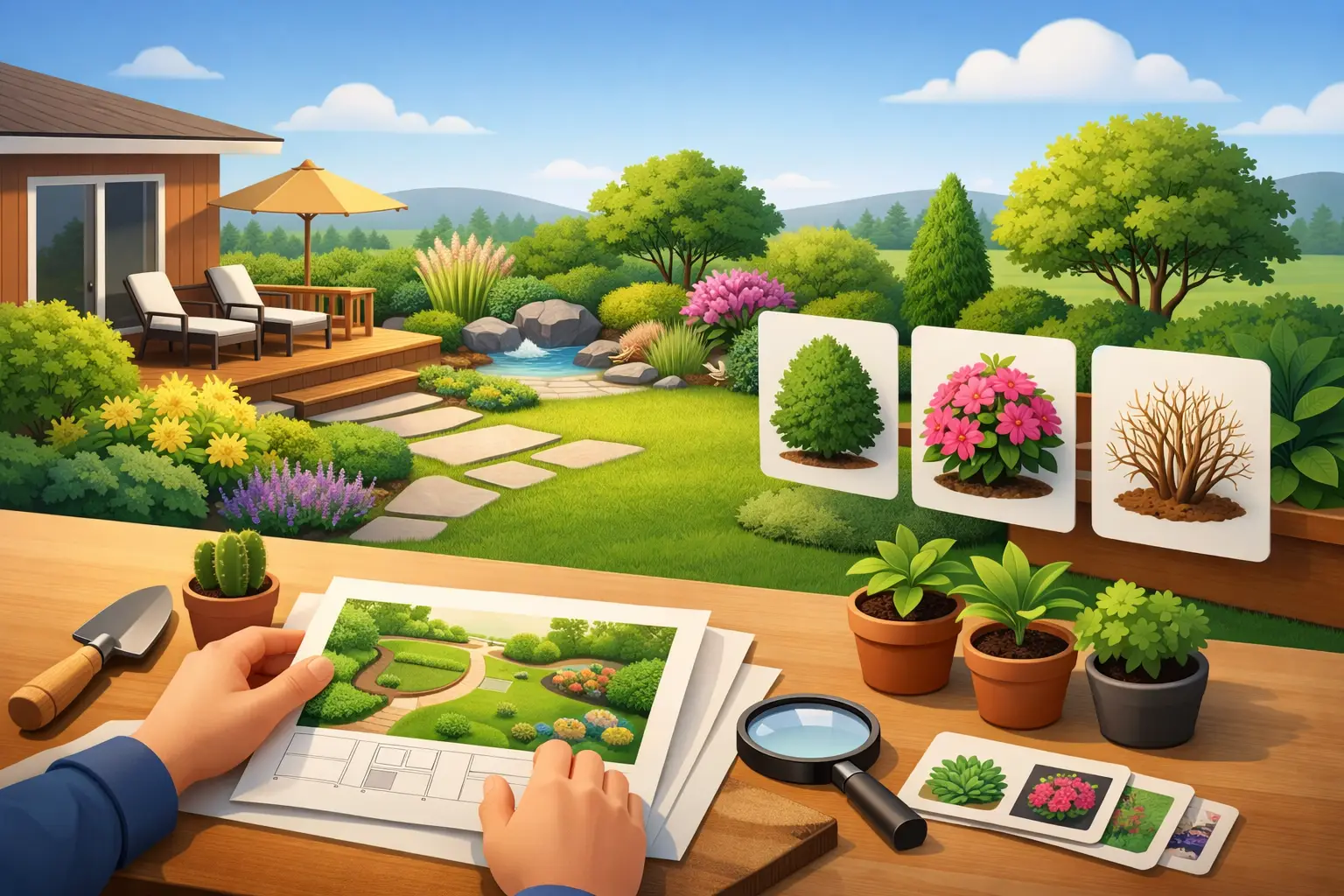
A backyard usually tells you what it can handle long before a plant tag does. The sunny fence line that bakes by noon, the damp corner where water lingers after rain, the patio bed that looks big in spring and crowded by July - these are the details that matter most when you're figuring out how to choose backyard plants.
The mistake most homeowners make is choosing plants by looks first and conditions second. That works for a weekend. It does not work for the next five years. A better approach is to treat plant selection like site planning. Start with what your yard is actually offering, then narrow your choices to plants that fit the space, the maintenance level, and the purpose.
How to choose backyard plants by starting with the site
Before you think about flower color or style, look at four things: light, soil, moisture, and climate. These are the non-negotiables.
Light is usually the biggest filter. Full sun means about six or more hours of direct sun. Part sun or part shade usually means four to six hours. Full shade is less than four hours, especially if the light is filtered. A plant labeled for sun may survive in shade, but it often gets leggy, blooms less, and becomes more disease-prone. The reverse is worse. Shade plants in hot afternoon sun often scorch fast.
Soil comes next. If your yard has dense clay, fast-draining sandy soil, or beds filled with builder-grade backfill, that affects root health more than most people realize. You do not need a lab test to start making smart decisions, but you should know whether your soil holds water or drains quickly. Dig a small hole, fill it with water, and watch what happens. If it drains slowly, plants that hate wet feet may struggle. If it dries out almost immediately, thirsty plants will need more support.
Moisture patterns are different from soil type. One side of the yard may stay dry because of tree roots or roof overhangs. Another may collect runoff every time it rains. Matching plants to those patterns saves time, money, and frustration.
Then there is climate. Hardiness zone matters, but it is only part of the picture. Heat, humidity, wind exposure, and freeze-thaw cycles all shape plant performance. A plant that is technically hardy in your zone may still be a poor fit if your backyard turns into a heat island in summer or stays exposed to winter wind.
Choose plants based on purpose, not just appearance
Once you know the site, decide what each area of the yard needs to do. This is where many planting plans get better fast.
A backyard plant can serve several jobs. It might provide privacy, soften a fence, frame a patio, attract pollinators, fill a bare slope, or simply give the space color for a longer season. If you skip this step, you can end up with a collection of healthy plants that still do not solve the problem.
For example, if you want privacy, you are not just choosing a pretty shrub. You are choosing height, width, density, and how quickly you need that screening to happen. If you want low-maintenance color near a seating area, long bloom time and clean growth matter more than rare foliage. If the goal is curb appeal from the house looking outward, plant layering and sight lines matter more than individual specimens.
This is also where trade-offs show up. Fast growers can fill space quickly, but many need more pruning or have weaker branch structure. Long-blooming plants can be great value, but some look rough between bloom cycles. Native plants are often excellent choices for resilience and habitat value, but they still need to match your site and design goals. There is no perfect plant in every setting.
How to choose backyard plants that fit mature size
One of the most expensive planting mistakes is designing for the one-gallon pot instead of the mature plant. Small plants are easy to underestimate, especially in new beds that look empty.
Always check mature height and width, then picture that plant three to five years from now. A shrub that reaches six feet wide should not be planted three feet from a walkway unless you want constant trimming. A tree planted too close to a patio, fence, or foundation may create bigger problems later with roots, shade, or structural crowding.
Spacing matters for health as much as appearance. Plants crammed too tightly have less airflow, which can raise disease pressure and make maintenance harder. On the other hand, spacing too far apart can make a new landscape look sparse for a long time. The right answer depends on your timeline. If you want a fuller look sooner, use temporary fillers or combine slower structural plants with perennials and grasses that bulk up faster.
Think in layers. Trees create canopy, shrubs create structure, and perennials or groundcovers fill the lower zone. That layered approach usually feels more intentional and performs better than repeating one plant everywhere.
Match maintenance to real life
A plant is only a good choice if you are realistically willing to care for it. This sounds obvious, but it is where many backyard plans drift off course.
If you enjoy pruning, feeding, deadheading, and seasonal refreshes, your plant palette can be broader. If you want the yard to look good with minimal weekly effort, choose plants known for clean habits, disease resistance, and lower water needs once established.
Be honest about irrigation too. Some plants are called drought-tolerant, but only after they are established. During the first growing season, almost everything needs consistent attention. If you know you will not hand-water often, that should affect what you install and where.
Mess is another practical issue. Some plants drop seed pods, berries, flowers, or leaves in ways that are charming in one area and annoying in another. Near pools, patios, and walkways, cleaner plants are often the smarter move. Near naturalized edges or wildlife-focused areas, that same trait may be completely fine.
Use style, but use it after function
This is the fun part, and it matters. Your backyard should look like it belongs to your home and the way you live.
Modern yards often work well with strong forms, ornamental grasses, structured evergreens, and a tighter color palette. Cottage-style spaces can handle softer layering, longer bloom sequences, and a more relaxed mix. A family-focused backyard may need durable plants around play zones and tougher selections near dog traffic. Entertainment spaces often benefit from plants that soften hardscape without overwhelming seating areas.
Color should support the overall space, not fight it. Repeating foliage color is often more effective than chasing constant flower variety. Green, silver, burgundy, and blue-toned foliage can create a cleaner, more cohesive look than stuffing every bed with unrelated blooms.
Seasonality matters too. If all the interest peaks in spring, the yard may feel flat for the rest of the year. Try to build in a sequence - maybe spring flowering, summer foliage texture, fall color, and winter structure from evergreen forms or branching shape.
Technology can make plant selection less guesswork
Choosing plants used to mean bouncing between nursery tags, internet searches, and rough sketches on paper. That process still works, but it leaves a lot of room for mismatch.
A better workflow is to visualize the space first, then test plant ideas against real conditions. That is where digital planning tools can be genuinely useful. Instead of guessing at spacing, layout, or how a planting bed will balance against a patio or fence, you can make decisions with a clearer picture of scale and placement. For homeowners who want expert-backed direction without hiring a full design team for every step, a tool like Backyard Buddy helps close the gap between inspiration and a plant list that makes sense.
That matters because plant choice is rarely about one plant in isolation. It is about how the whole backyard works together - visually, practically, and over time.
A simple filter for better decisions
If you feel stuck, run every plant through the same quick test. Does it fit your light? Does it fit your soil and moisture? Does it fit the mature size of the space? Does it fit your maintenance level? Does it fit the job you need it to do?
If the answer is no on even one of those, it may still survive, but it is probably not the best choice. The goal is not to force a plant into your yard. The goal is to choose plants your yard can support with less effort and better results.
The best backyard plantings do not happen because someone picked the prettiest options at the nursery. They happen because the right plants were matched to the right place, with a clear plan behind them. Start there, and your yard gets easier to build, easier to maintain, and a lot more satisfying to live with.