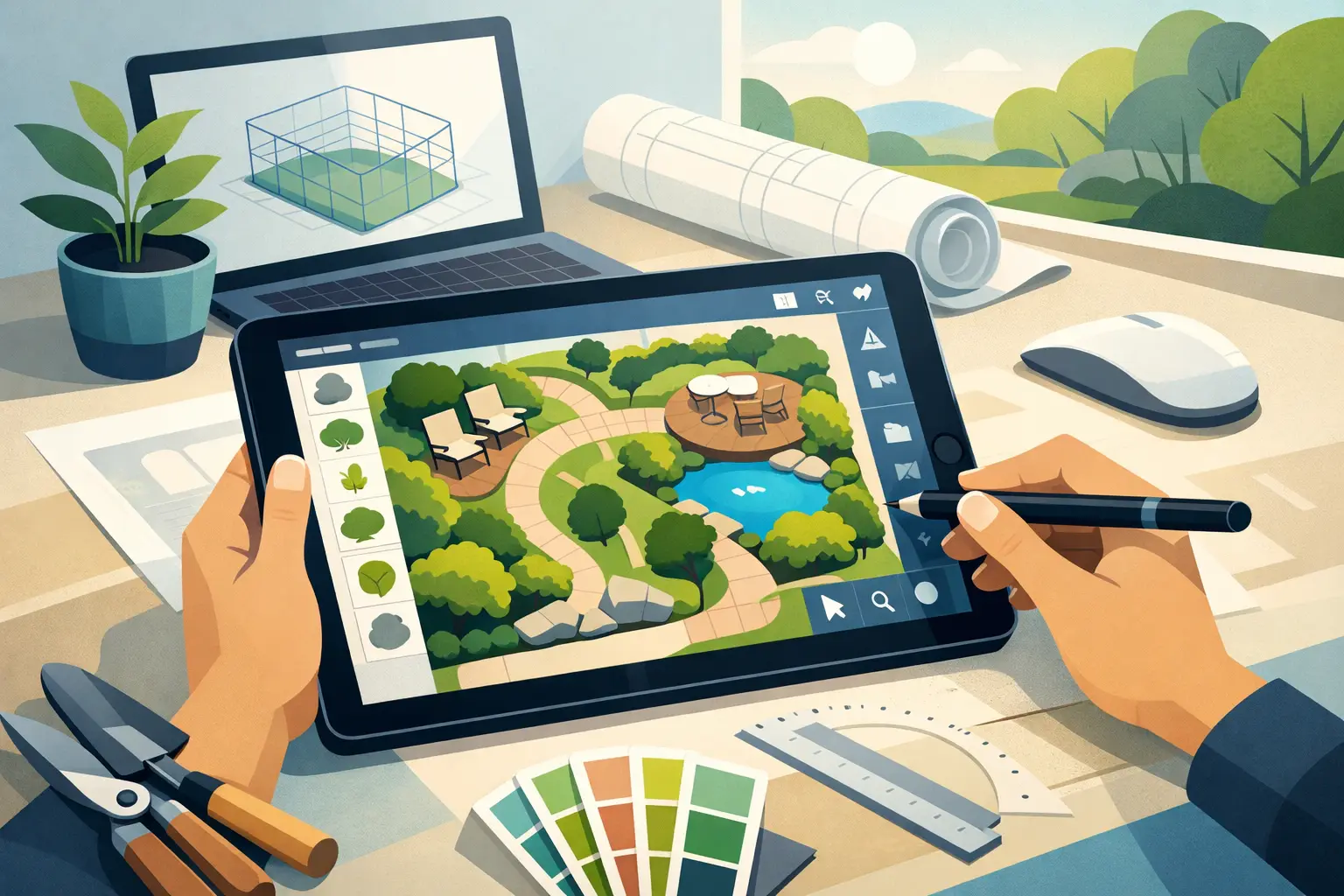
A tape measure, a sketch on scrap paper, and a few plant tags can get a yard project started. They usually do not get it finished well. Once spacing, sun exposure, drainage, traffic flow, and budget all start pulling in different directions, garden design software becomes the faster way to make decisions before you dig, buy, or build.
For homeowners and DIY landscapers, the real value is not just seeing a prettier layout on a screen. It is catching problems early. A walkway that looked generous on paper may feel too tight once furniture is added. A bed that seemed balanced may end up overcrowded in one growing season. A plant choice that looks great in spring may struggle in the wrong light or soil conditions. Good software helps you test ideas before they become expensive mistakes.
What garden design software should actually help you do
The best tools do more than let you drag a shrub icon across a grid. They should help you organize a project from idea to action. That means visualizing the space, comparing layout options, understanding scale, and making smarter planting decisions.
For most homeowners, the job is rarely just “design a garden.” It is more like figuring out how to fit a planting bed around an AC unit, make the front yard look cleaner from the street, create privacy near a patio, or solve a patchy area where grass never grows. Software is useful when it supports those real-world goals instead of acting like a generic drawing tool.
A practical platform should help with dimensions, layout balance, and plant selection, but it should also make the process feel manageable. That matters if you are planning your first foundation bed and it also matters if you have garden experience but want a faster workflow.
The features that matter most in garden design software
Not every feature carries equal weight. Many homeowners get distracted by flashy visuals and miss the tools that actually save time.
Easy layout visualization
You should be able to map beds, lawn areas, patios, paths, and planting zones without a steep learning curve. If the app feels like professional CAD software built for architects, it is probably too heavy for a weekend yard project. The strongest consumer tools make it easy to sketch ideas quickly, then refine them.
Visualization matters because outdoor spaces are hard to judge from memory. A curve that feels subtle in your head may become exaggerated in the yard. A tree placement may look centered from one angle and awkward from another. When software lets you see layout relationships clearly, better decisions follow.
Accurate scaling and measurement
This is where many simple design tools fall short. A beautiful concept is not enough if the bed depth is wrong, the pavers do not fit, or the tree matures too close to the house. Good garden design software should help you work with realistic dimensions so your plan can move from screen to soil.
This is also where trade-offs start to show. Some apps are very simple to use but only approximate scale. Others are more precise but take longer to learn. The right balance depends on your project. If you are rearranging container groupings, rough visualization may be enough. If you are planning retaining walls, patios, or major planting beds, measurement accuracy matters a lot more.
Plant guidance that goes beyond appearance
A plant database is useful. A smart plant recommendation system is better. Homeowners do not just need names and photos. They need help selecting plants that make sense for sun, climate, spacing, maintenance level, and the purpose of the area.
That purpose matters. A privacy screen needs different plant logic than a pollinator border. A low-maintenance side yard needs different choices than a showpiece entry bed. Software becomes much more valuable when it helps connect plant selection to actual performance in your yard, not just style boards.
Real problem-solving support
The strongest digital tools do not stop at design. They help with the issues that show up once the plan meets reality. Maybe a plant starts yellowing. Maybe a section of the bed drains poorly. Maybe you realize your chosen layout creates too much maintenance.
That is why integrated support can be more useful than a design tool in isolation. If your software also helps diagnose plant issues or adjust planning choices based on real conditions, it becomes a year-round decision tool instead of a one-time sketch pad.
Who benefits most from garden design software
Garden design software is not only for people doing full landscape renovations. In fact, it is often most useful for smaller, common projects where homeowners tend to make rushed decisions.
If you are updating a front foundation bed, planning a backyard refresh, adding privacy planting, redesigning an awkward side yard, or trying to make outdoor living areas feel more intentional, software gives structure to the process. It helps turn loose ideas into a workable plan.
Beginners benefit because they get guidance and visual clarity. More experienced gardeners benefit because they can move faster, compare options, and avoid backtracking. Even people with a good eye for design often struggle with spacing, plant maturity, or how separate yard elements work together. Software closes that gap.
What to watch out for when comparing tools
Some garden design software looks impressive in a demo but becomes frustrating in actual use. The biggest warning sign is complexity without practical payoff. If it takes too long to build a simple plan, most homeowners will stop using it before the project gets moving.
Another issue is generic output. A tool may create polished layouts but offer very little insight into whether the plan fits your conditions. That can leave you with a design that looks good on screen and performs poorly in the yard.
It is also worth checking whether the tool is built for the way people really plan outdoor projects today. Many homeowners want to work from a phone while standing in the yard, comparing measurements, checking a planting area, or making decisions in real time. A tool that only works comfortably at a desktop may feel limiting.
Why mobile-first tools make more sense for homeowners
Outdoor planning does not happen only at a desk. It happens while you are pacing off a fence line, standing in front of a bare corner, or looking at the afternoon sun hit the patio. That is why mobile-first garden design software often fits homeowners better than traditional desktop programs.
A good mobile experience keeps the planning process close to the actual space. You can capture ideas when they happen, adjust plans on site, and make decisions with the yard right in front of you. That makes the workflow faster and usually more accurate.
This is where an app-based approach can stand out. Instead of forcing users to learn complex design software, the best platforms package landscape expertise into a simple, guided experience. Backyard Buddy is a good example of that shift. It brings planning, visualization, and plant problem support into one practical tool, which is a better match for how most homeowners actually manage outdoor projects.
The best choice depends on your project
There is no single best garden design software for every user. The right fit depends on what you are trying to accomplish.
If your main goal is inspiration, almost any simple visual planner can help. If you need accurate layout planning, plant guidance, and support as the project evolves, you need more than a basic drawing app. If you are tackling an outdoor space in phases, it helps to choose a tool that supports ongoing decisions instead of a one-time concept.
It also depends on how hands-on you want to be. Some people enjoy fine-tuning every detail. Others want expert-backed recommendations that reduce decision fatigue. Neither approach is wrong. The best software simply meets you where you are and helps you move forward with confidence.
A smart way to evaluate garden design software
Before choosing a tool, think about the decisions you need help making. Are you trying to fix layout confusion, choose better plants, avoid costly mistakes, or solve plant health issues along the way? The clearer your goal, the easier it is to spot the right software.
Look for a platform that saves time, reduces guesswork, and gives you useful answers in the moment. That may mean fewer flashy features and more practical guidance. For most homeowners, that is the better trade.
A great yard rarely comes from random good taste alone. It comes from making a series of sound decisions before the work begins, and then adjusting well as the space takes shape. The right software helps with both.