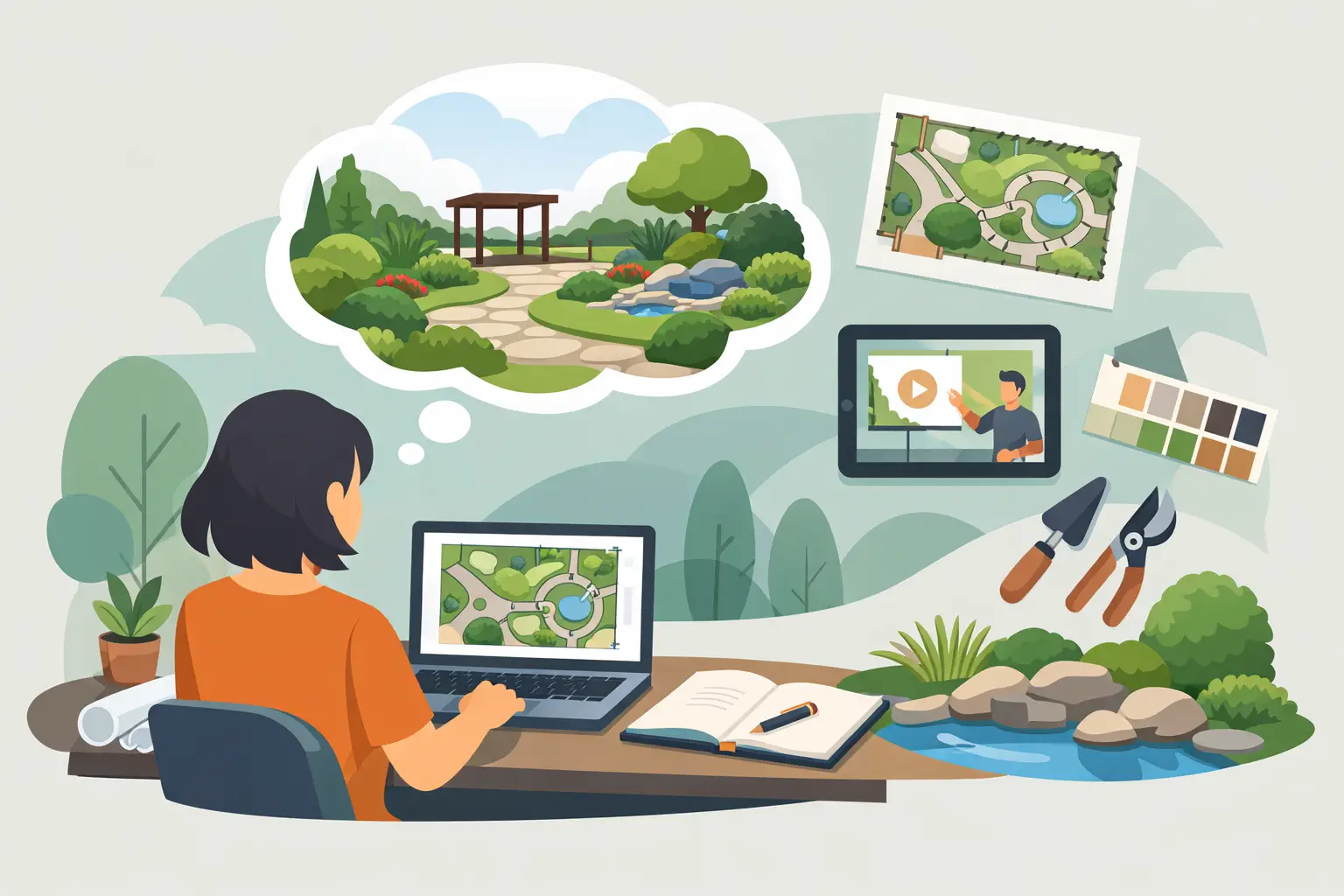
Most people do not struggle with garden ideas. They struggle with turning those ideas into a yard that actually works. If you're figuring out how to learn garden design, the fastest path is not memorizing plant names or copying Pinterest photos. It is learning how to make smart decisions about space, function, scale, and maintenance before you ever buy a shrub.
That shift matters. A garden is not just a collection of plants. It is a system made up of movement, sunlight, drainage, views, use patterns, and upkeep. When one part is off, the whole space feels harder than it should. Good design reduces guesswork and saves money because fewer choices have to be fixed later.
How to learn garden design from the ground up
The best way to learn garden design is to train your eye and your judgment at the same time. You need enough visual awareness to recognize what looks balanced, but you also need practical knowledge to know whether that layout can survive real life.
Start by studying actual yards, not just polished inspiration shots. Look at front yards in your neighborhood, planting beds at parks, and outdoor living spaces at homes that feel easy to use. Ask simple questions. Where do your eyes go first? What creates structure in winter? How wide are the walkways? Which plants are carrying the visual weight, and which ones are just filler?
This kind of observation builds design instinct faster than passively scrolling images. It also helps you notice trade-offs. A highly layered cottage-style planting may look great in peak season but demand more pruning, watering, and editing. A cleaner layout with fewer species can look calmer and cost less to maintain, but it may feel less lush. Neither is automatically better. It depends on the yard and the homeowner.
Learn the core design principles before plant shopping
A lot of beginners jump straight to plants because plants feel like the fun part. The problem is that plant selection is one of the last decisions, not the first. Before you choose varieties, learn the principles that shape the space.
Start with function
Every good garden solves a use problem. Maybe you need privacy from a neighbor, safer footing from the driveway to the porch, a better view from the kitchen window, or a backyard that can handle kids, dogs, and a grill station at the same time. Function gives the design direction.
If a space looks attractive but does not support how you live, it will feel frustrating fast. That is why experienced designers think in zones. One area may be for arrival, another for entertaining, another for screening, and another for planting that softens the edges of the yard.
Understand scale and proportion
This is where many DIY plans go sideways. Small plants get scattered across a large yard and disappear. Oversized shrubs get placed under windows and outgrow the space in two years. Scale is about matching the size of elements to the size of the house, the lot, and each other.
Proportion is the relationship between those elements. A narrow front bed planted with bulky evergreens can feel cramped. A large patio bordered only by tiny perennials can feel unfinished. The goal is visual balance, not mathematical perfection.
Learn repetition, rhythm, and contrast
A yard feels cohesive when some elements repeat. That could be the same grass form used in multiple beds, a limited palette of hardscape materials, or a consistent shape language across plantings. Repetition keeps a space from looking random.
Rhythm guides the eye through the yard. Contrast adds energy. You might pair fine-textured ornamental grasses with broad-leaf shrubs, or dark green foliage with silver plants. The key is control. Too little contrast looks flat. Too much makes the yard feel busy.
Practice on your own space first
You do not need a perfect property to start learning. In fact, your own yard is the best classroom because it forces you to work with real constraints.
Measure the space. Track where the sun falls in the morning and afternoon. Notice drainage after rain. Watch how people naturally move through the yard. Those details matter more than style labels.
Then sketch a simple base plan. It does not have to be fancy. You only need the house footprint, property edges, major windows, doors, existing trees, utility areas, and obvious problem spots. Once you can see the space on paper or on a screen, design decisions get easier because you're no longer guessing.
This is also where digital tools can speed up the learning curve. An app like Backyard Buddy can help homeowners visualize layouts, test ideas, and make planning decisions with more confidence before committing to materials or planting. That is especially useful if you know what you want the yard to do but are still working out how the pieces should fit together.
How to learn garden design without getting overwhelmed
Garden design gets easier when you break it into layers. Trying to solve everything at once usually leads to scattered choices.
Start with layout. Where should paths, gathering areas, lawn, screens, and beds go? Then move to structure. That includes trees, large shrubs, edging, and hardscape elements that anchor the design. After that, fill in secondary plants, seasonal color, and finishing details.
This order matters because structure does most of the long-term work. A yard with strong bones can still look good when perennials are cut back or annuals are not planted. A yard with weak structure depends on constant seasonal effort to look finished.
It also helps to use a tighter palette than you think you need. Beginners often assume variety creates interest. In practice, too many materials, shapes, and plant types can make a space look less designed. Fewer choices, repeated well, usually create a stronger result.
Build plant knowledge the useful way
You do not need to become a walking plant encyclopedia. You need to understand how plants behave in design.
Learn plants in categories. Study evergreen anchors, deciduous shrubs, ornamental grasses, flowering perennials, ground covers, shade plants, and screening plants. Then learn what each category does in the landscape. Is it there to provide year-round structure, soften an edge, create movement, fill seasonal gaps, or block an unwanted view?
Pay attention to mature size, growth rate, light needs, water needs, and maintenance habits. Bloom color matters, but it is rarely the deciding factor in a successful plan. A plant that fits the site and supports the design will outperform a prettier option that constantly struggles.
This is another place where experience matters. A plant can be technically hardy in your zone and still be a bad choice for your exact conditions. Clay soil, reflected heat, deer pressure, poor drainage, and irrigation limits all change what works.
Study finished landscapes with a designer's eye
If you want to accelerate your progress, stop looking at gardens as decoration and start reading them as decisions.
When you see a landscape you like, identify why it works. Is the walkway wide enough to feel welcoming? Do the foundation plantings match the scale of the home? Is there a clear focal point near the entry? Are the beds curved for a reason, or would straight lines have made more sense with the architecture?
Do the same with landscapes that do not work. A crowded foundation, awkward bed shapes, mismatched materials, and random plant spacing can teach just as much as a polished design. Once you can spot the difference, you start designing with more intention.
Expect revision to be part of the process
One of the most useful lessons in garden design is that first drafts are rarely final drafts. Professionals revise constantly. They test spacing, adjust sightlines, simplify material choices, and rethink plant combinations once the full plan is visible.
That is not failure. It is design.
The real mistake is locking into purchases too early. Buy too soon, and you end up designing around carts of plants instead of around the space itself. Plan first. Edit second. Purchase last.
If you are learning on your own, give yourself room to test ideas. Try alternative layouts. Compare a more formal plan against a looser one. Ask whether a feature earns its footprint. Sometimes the smartest design move is removing something, not adding more.
The fastest way to improve
The fastest way to get better at garden design is to combine observation, practice, and feedback. Read enough to understand the principles, but do not stay stuck in theory. Apply those principles to a real yard, evaluate what works, and refine your thinking from there.
You also do not need to learn everything before you begin. Start with layout, function, and scale. Add plant knowledge as you go. Use planning tools that help you see the whole space clearly. The goal is not to think like a hobbyist collecting ideas. It is to think like a designer making deliberate choices.
A well-designed garden rarely starts with perfect certainty. It starts with a smarter process, and that is something you can learn faster than you think.