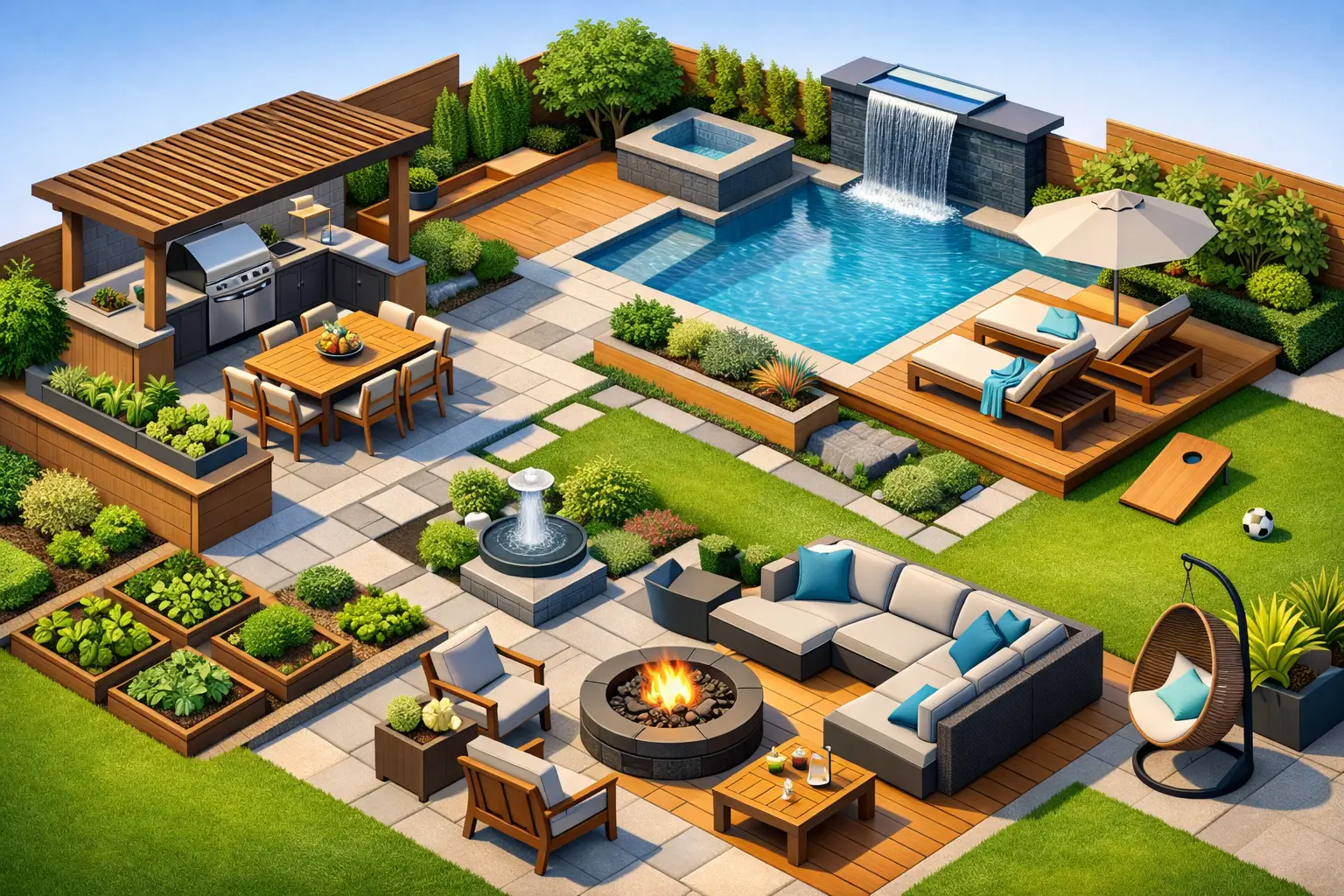
A backyard redesign usually goes wrong before the first plant is bought. A homeowner sees an inspiring patio photo, orders furniture, adds a few shrubs, and later realizes there is no shade, no clear path, and no room for the kids or dog to move around. Learning how to redesign a backyard starts with a better question: what should this space make easier for your household?
The best yards are not packed with features. They are organized around real routines, local conditions, and a plan that can be built without expensive do-overs. Here is how to move from scattered ideas to an outdoor space that looks intentional and works every day.
How to redesign a backyard around real life
Before measuring patios or choosing plants, pay attention to how your yard currently behaves. Walk outside at breakfast, midafternoon, and after sunset. Notice where the sun is strongest, where water lingers after rain, which views you want to keep, and where wind makes a sitting area uncomfortable.
Then make a short list of what you actually want to do outdoors. A yard designed for weekend dinners needs something different from one built around vegetable beds, a play area, a fire pit, or a quiet place to read. Most backyards need to do more than one job, but every use does not deserve equal space.
Choose one primary purpose and two supporting purposes. For example, your primary goal might be outdoor dining, with gardening and a dog-friendly lawn as supporting goals. That decision keeps the layout from becoming a collection of competing features.
Start with the fixed conditions
Mark the elements that are difficult or costly to change: the house, doors, utility boxes, mature trees, drainage routes, fencing, existing grade changes, and property boundaries. These are not inconveniences to design around later. They are the framework for the entire plan.
Also identify your climate zone and the light conditions in each part of the yard. A plant that looks great in a full-sun inspiration photo can struggle beside a north-facing fence. Likewise, a lush lawn may not be the right answer under dense tree canopy or in a dry region where water use is a major concern.
Take photos from the house looking out, not just from the yard looking in. The view from your kitchen, living room, or bedroom often matters more than the view from the far corner of the property.
Build zones before choosing materials
Think of a backyard as a set of connected zones instead of one open area. Clear zones make even a modest yard feel larger because each space has a purpose and a sense of order.
Start at the back door. This is usually the most valuable area because it is easiest to use. Place the feature you will use most often close to the house, whether that is a dining table, grill station, lounge seating, or a small container garden. If you have to cross wet grass or walk to the far end of the lot to make dinner outside, the feature will get less use than you expect.
From there, create a natural flow to secondary spaces. A path to a fire pit, garden shed, raised beds, or play zone should be direct enough to feel obvious. Avoid narrow, awkward routes that force people through planted beds or around furniture.
Leave enough room for movement. A patio can technically fit a table and chairs but still feel cramped when someone needs to pull out a chair. A lawn can look generous on paper but become unusable when it is broken into tiny strips around hardscape. Give each zone breathing room, then use planting beds, edging, changes in material, or low screens to define its boundaries.
Solve drainage and grade early
Drainage is one of the least glamorous parts of a redesign and one of the most expensive to ignore. Water should move away from the house and not pool near foundations, patios, or high-traffic paths. If your yard stays soggy, a new lawn or fresh mulch will only disguise the problem temporarily.
Watch where downspouts discharge and where runoff travels during a hard rain. Sometimes the fix is straightforward: extend a downspout, regrade a small area, or redirect water into a planted rain garden. Larger slope issues, retaining walls, or recurring water near the foundation may require professional assessment.
This is also the moment to decide whether you need irrigation. Drip irrigation is often a smart choice for planting beds and vegetable gardens because it delivers water close to roots with less waste. It is not necessary for every yard, but planning for it before paths and patios go in prevents unnecessary excavation later.
Choose a hardscape that fits your maintenance level
Hardscape gives a backyard its structure. Patios, decks, paths, retaining walls, and edging create the surfaces that make outdoor living possible. They also tend to consume the largest share of the budget, so material choices should be practical, not just photogenic.
Concrete is often cost-effective and durable, especially for larger patios. Pavers can offer more pattern, color, and repair flexibility, but installation costs may be higher. Gravel is budget-friendly and drains well, though it can shift under furniture, migrate into lawn areas, and be frustrating for strollers or mobility aids. Wood decks create a warm transition from the house but require ongoing care, while composite decking lowers maintenance at a higher upfront cost.
Match the surface to its job. A formal dining space benefits from a stable, level surface. A relaxed fire pit area may work well with gravel or decomposed granite, depending on local conditions. Do not select a material until you understand the preparation it needs underneath. Base depth, drainage, edging, and slope determine whether a patio lasts or settles unevenly after a season or two.
Plant in layers, not one-offs
Plants should support the layout, soften hard edges, and create seasonal interest. They should not be an afterthought added wherever there happens to be empty soil.
Build planting beds with layers. Taller trees, shrubs, or ornamental grasses can create privacy and structure. Mid-height perennials fill the visual middle. Groundcovers and low plants soften bed edges and reduce bare soil. Repeating a few plant varieties usually looks more cohesive and is easier to maintain than buying one of everything.
Prioritize plants suited to your specific sun, soil, and moisture conditions. Native and regionally adapted plants can be excellent choices because they are often better aligned with local weather and pollinators, but native does not automatically mean maintenance-free. Every plant still needs the right location and appropriate establishment care.
If you are unsure what will fit, visualize the layout before buying. A planning tool such as Backyard Buddy can help you test ideas, organize design decisions, and avoid guessing at the relationship between beds, paths, furniture, and plants. It is faster to change a digital concept than to relocate a mature shrub.
Plan for mature size
The most common planting mistake is spacing for how plants look at the garden center. Shrubs and perennials may look sparse at first when spaced correctly, but crowding them creates years of pruning, poor airflow, and plants competing for light and water.
Read mature width and height estimates, then allow for variation based on your growing conditions. Keep shrubs away from walkways and walls if they will eventually block access. Place thorny or messy plants away from routes where people, pets, and guests regularly pass.
Add comfort with shade, light, and privacy
A beautiful yard that is too hot at 4 p.m. or too dark after dinner has limited value. Comfort features are what turn a redesigned backyard into a space people use.
For shade, consider existing trees first. Pruning may improve safety and allow filtered light without removing the canopy you already have. If new shade is needed, the right solution depends on budget and permanence. A shade sail is flexible and affordable but needs strong anchor points. A pergola defines an outdoor room and can support vines or a canopy. A covered structure offers the most weather protection but usually requires the largest investment and may involve permits.
Lighting should be purposeful. Use path lights where footing changes, soft ambient lighting near seating, and focused task lighting around cooking areas. Too many bright fixtures can make a backyard feel like a parking lot and create glare through house windows. Warm, layered light is usually more inviting.
Privacy can come from fencing, evergreen screening, layered shrubs, ornamental grasses, or a trellis. Planting is often softer and more attractive than building a tall solid barrier, but it takes time to fill in. If privacy is urgent, combine a structural screen with plants that will gradually take over the visual job.
Create a budget that protects the plan
A phased backyard redesign is often smarter than trying to finish everything in one season. Start with the work that affects every later decision: drainage, grading, utilities, major hardscape, and trees. Then move to planting, furniture, lighting, and decorative details.
Set aside a contingency fund for surprises, particularly when digging near old patios, roots, buried rock, or unknown utility lines. Labor, delivery, base material, and removal of old concrete can change the cost of a project more than the price of the visible finish.
Spend where mistakes are hardest to fix. A properly built patio, a well-placed tree, and effective drainage are worth more than trendy accessories. You can add pillows, planters, and seasonal color later. You cannot easily correct a patio that slopes toward the house.
Keep the finished yard usable
A redesign should make maintenance more predictable, not create a second full-time job. Choose bed sizes you can reach for weeding, keep lawn areas simple enough to mow, and group plants with similar water needs. Mulch planting beds to help regulate moisture and suppress weeds, while keeping it away from the bases of trunks and stems.
Then give the new space time to settle. The first season reveals how people move through it, where sun is harsher than expected, and which plants need adjustment. Treat those observations as useful design feedback. A backyard gets better when it responds to the life happening in it, not when it is frozen as a finished photo.