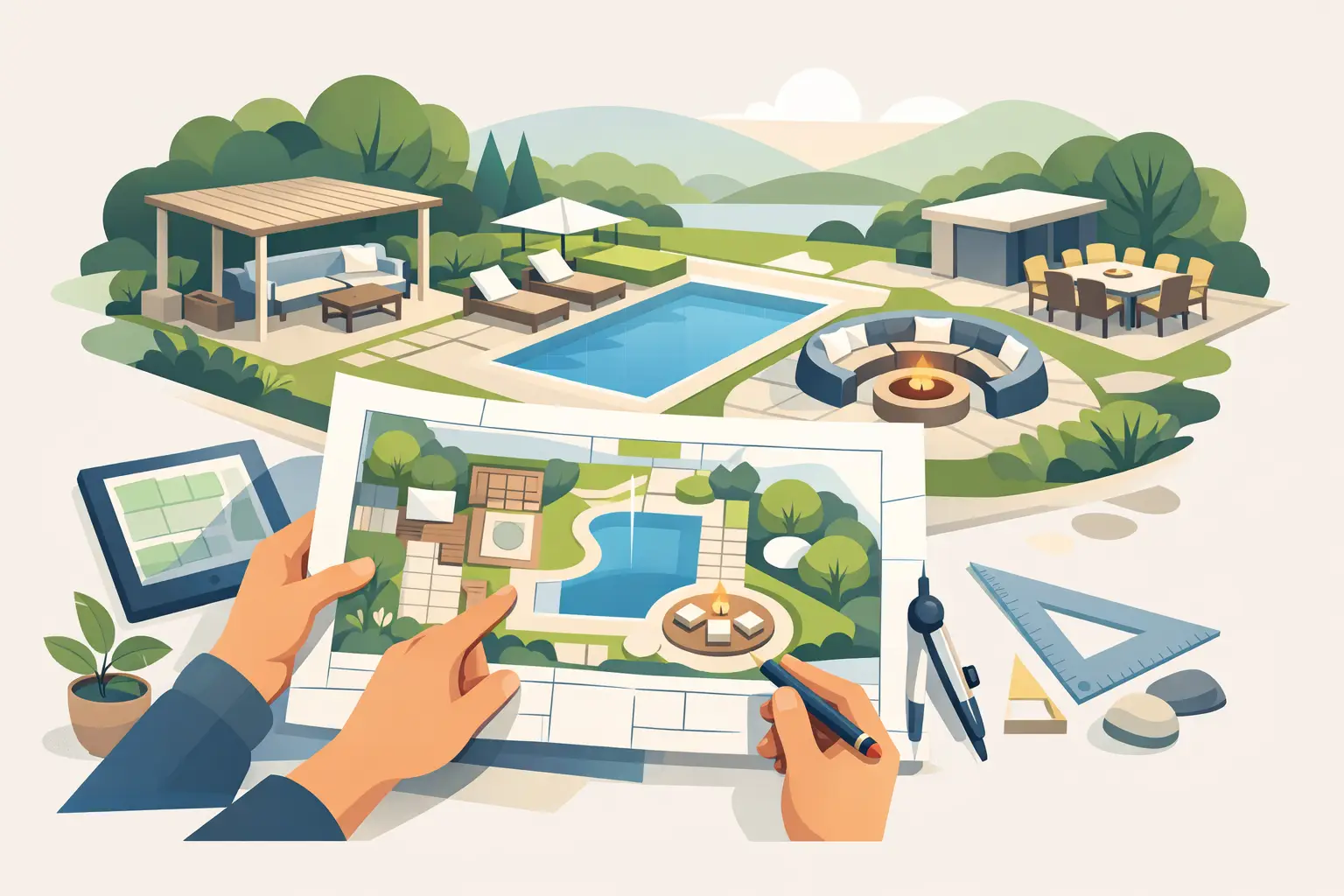
Most yards do not fail because of bad taste. They fail because nothing was planned to work together.
That is why outdoor area planning matters before you buy a single plant, move a patio chair, or price out a new walkway. A yard can look great in one photo and still feel awkward to live in every day. The difference usually comes down to layout, function, scale, and knowing what your space can realistically support.
Good planning is not about making your yard look formal or expensive. It is about making it usable. You want a space that fits how you actually live, whether that means weekend grilling, a safer play zone for kids, a cleaner front entry, better privacy, or a garden that does not turn into a maintenance trap by midsummer.
What outdoor area planning really solves
A lot of homeowners start with fragments. They want a fire pit, maybe some raised beds, maybe a privacy hedge, maybe better curb appeal. None of those ideas are wrong. The problem starts when each one gets added without a full picture.
Outdoor area planning solves the disconnect between ideas and reality. It helps you see how traffic moves through the yard, where sunlight changes during the day, which views you want to highlight or block, and how much room features actually need. A dining set that fits on paper may still feel cramped if there is no clear path around it. A row of shrubs may look balanced at planting time and become a maintenance headache two years later.
Planning also cuts down on expensive redo work. Replanting the wrong species, relocating a path, or rebuilding a patio edge costs more than slowing down up front. If you have ever bought plants on impulse and then spent a season trying to make them work, you already know this.
Start with use, not decoration
The smartest way to plan an outdoor space is to begin with function. Before you think about colors, plant styles, or materials, ask a simpler question: what does this area need to do?
A backyard may need to handle dining, dog traffic, drainage, and privacy all at once. A front yard may need clearer access to the door, low-maintenance planting, and stronger visual structure from the street. A side yard may need to stop being wasted space and become storage, a garden run, or a clean utility corridor.
This is where many projects get off track. Homeowners often design around a feature instead of a purpose. They pick the pergola first, then try to force the rest of the yard around it. Sometimes that works. Often it creates awkward spacing or uses up the best zone in the yard for the wrong activity.
When you plan around use, priorities become clearer. If your household entertains often, seating and circulation deserve more space than ornamental beds. If low maintenance matters most, a large lawn and fussy plant palette may work against you. If privacy is the issue, screening becomes structural, not decorative.
Read the site before you change it
Every yard has constraints. Some are obvious, like slope or poor drainage. Others are easier to miss, like harsh reflected heat near a wall, compacted soil where nothing thrives, or a fence line that creates deep afternoon shade.
Outdoor area planning works best when you treat the site as a real set of conditions, not a blank canvas. Sun exposure affects plant choice, comfort, and where people will actually spend time. Drainage affects everything from lawn health to hardscape longevity. Existing trees can be a major asset, but only if you plan around their roots, shade pattern, and mature canopy.
There is also the issue of scale. A feature can be attractive and still be wrong for the lot. Oversized beds can make a small yard feel crowded. Tiny plantings around a large patio can make the whole space feel unfinished. The right answer depends on the size and shape of the property, the home architecture, and how much maintenance you want to take on.
This is one reason visualization tools are so useful. It is much easier to make smart adjustments before installation than after. Seeing zones, dimensions, and plant placement in context gives you a better read on balance and proportion.
Build zones that make sense
Most outdoor spaces perform better when they are divided into clear use areas. That does not mean making the yard feel chopped up. It means giving each part of the property a job.
A strong plan often includes active zones, transition zones, and visual support zones. The active zones are where things happen: dining, lounging, cooking, playing, gardening. Transition zones are paths, entries, and movement corridors. Visual support zones are the areas that frame views, soften edges, provide privacy, or create seasonal interest.
The key is flow. If guests have to cut through a garden bed to reach a seating area, the layout is off. If the grill is too far from the dining table, the setup becomes annoying to use. If the kids' play area sits directly in the main entertaining space, the yard may feel like it is trying to do too many things in one place.
This is where trade-offs matter. A small yard cannot do everything at full scale. You may need a compact dining area instead of a large lounge zone. You may need vertical planting instead of deep border beds. Good planning is not about fitting in every idea. It is about choosing what deserves space.
Plants should support the layout
Planting is often the most emotional part of a yard project, but it should not drive the plan by itself. Plants work best when they reinforce structure, movement, and function.
Use planting to direct attention, soften hard edges, and create privacy where you need it. Foundation plants can anchor the home, but they should not block windows or crowd walkways. Screening plants can improve comfort fast, but the wrong species can outgrow the space and create constant pruning work. Accent plants can add personality, but too many focal points compete with each other.
This is also where regional reality matters. A plant that looks great in a photo may be wrong for your climate, light conditions, or maintenance tolerance. Smart outdoor area planning connects the design look you want with plants that can actually thrive there.
If you are unsure about plant health or species fit, diagnosis matters just as much as design. A plan is only as good as the living material in it. Tools that combine layout support with plant troubleshooting can save time and prevent bad replacements.
Hardscape decisions shape the whole experience
Patios, paths, edging, retaining elements, and built features do more than add polish. They define how the yard works.
A patio should fit furniture with enough clearance to move comfortably. A path should lead naturally where people already want to go. Steps should feel safe and proportionate. Materials should match both the look of the house and the practical wear of the space. A slick surface near a pool, for example, may look clean but create safety issues. Gravel can be cost-effective, but it is not ideal in every high-traffic zone.
Budget matters here, but so does sequencing. It often makes sense to get the layout right first, then phase in upgrades. You may install a core patio now and add lighting, built-in seating, or expanded beds later. That is a lot better than installing pieces in the wrong place and paying twice.
Technology can make planning faster and smarter
This is where many homeowners gain real momentum. Instead of trying to imagine everything from scratch, you can use digital planning tools to test ideas before committing. That changes the process.
With a smart planning app, you can visualize layout options, think through plant placement, and catch spacing problems early. You can compare approaches, refine zones, and make decisions with more confidence. For homeowners who want expert guidance without booking a full custom design for every question, that speed matters.
Backyard Buddy is built for exactly that kind of workflow. It puts practical outdoor planning, design visualization, and plant problem support into one accessible tool, so you can move from idea to action with fewer guesses.
The biggest advantage is clarity. Once you can see the yard as a connected system instead of a list of disconnected purchases, better decisions come much faster.
The best plans stay flexible
A good outdoor plan is not rigid. It gives you direction while leaving room for change.
Maybe your budget comes in phases. Maybe you realize you need more shade than you expected. Maybe the family starts using the yard differently after the first round of improvements. That is normal. Outdoor spaces evolve.
The goal is not perfection on day one. The goal is to create a strong framework that can grow without turning messy. If the bones of the layout are right, you can upgrade planting, furniture, lighting, and features over time without losing cohesion.
That is the real value of thoughtful planning. It saves money, reduces regret, and gives you a yard that works better every season. Start with how you want to live outside, let the site tell you what is realistic, and make each decision support the whole space.