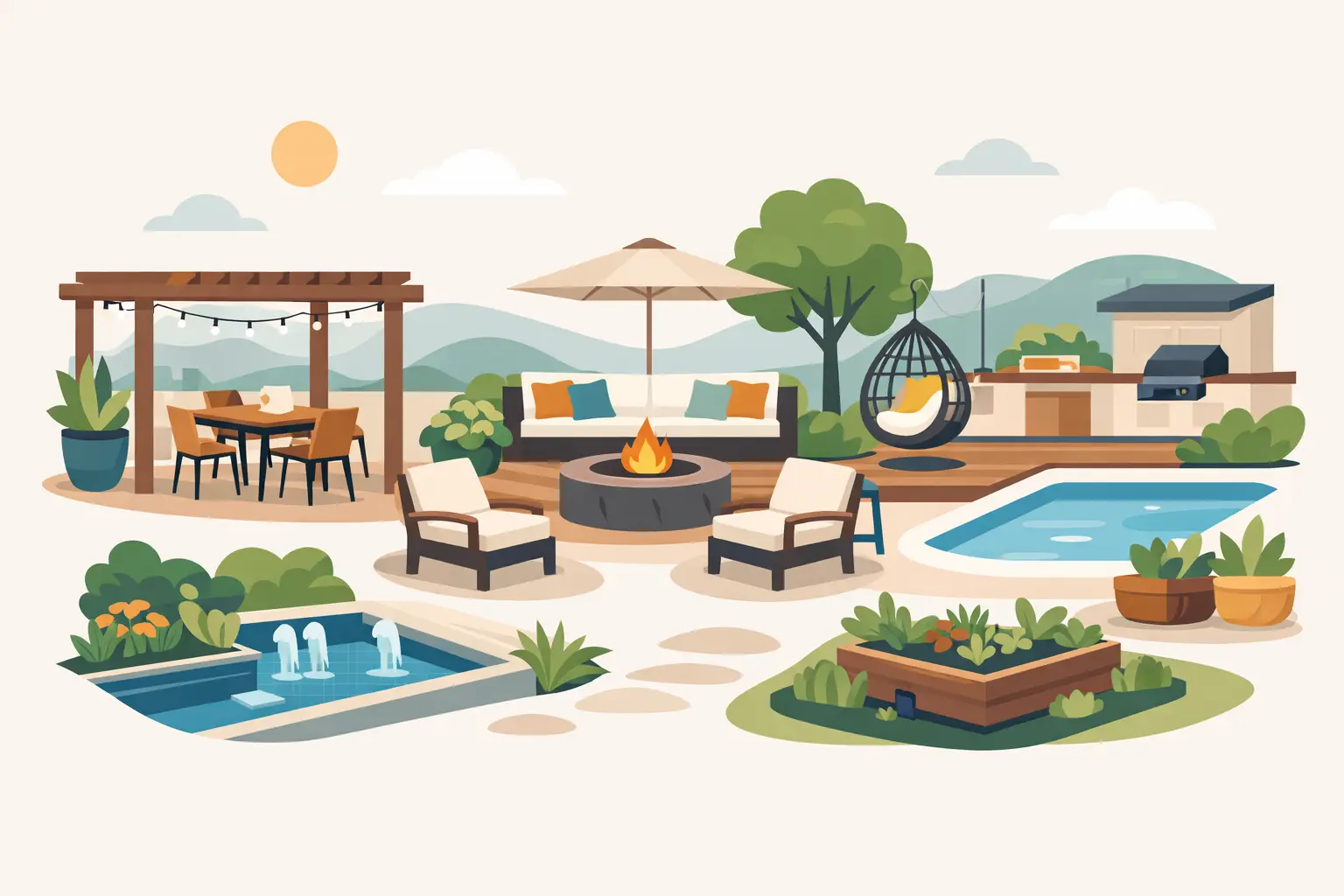
A backyard usually looks cluttered long before it looks finished. One chair gets added here, a planter goes there, and suddenly the whole yard feels busy but not better. The best outdoor space ideas fix that problem first. They give your yard a job, a layout, and a reason for every square foot.
That matters whether you have a compact patio, a suburban backyard, or a side yard you have mostly ignored. Good outdoor design is not about cramming in more features. It is about making the space easier to use, easier to maintain, and better matched to how you actually live.
Start with function, not furniture
A lot of outdoor projects go sideways because people shop before they plan. A fire pit looks great online. So does a dining set, a pergola, and a raised bed garden. But if they compete for space, shade, and circulation, the yard ends up feeling awkward.
Start with three simple questions. What do you want to do outside most often? How many people need to fit comfortably? What parts of the yard already have natural advantages, like morning sun, privacy, or easy access from the house?
This is the part most homeowners skip, and it is why so many upgrades feel disconnected. If the grill is too far from the kitchen, you will notice. If the seating area gets blasted by afternoon sun, you will use it less. If a planting bed blocks movement, the yard gets annoying fast.
Outdoor space ideas that make a yard feel bigger
The fastest way to improve an outdoor area is to create zones. Even a small backyard feels larger when each area has a clear purpose.
1. Build one strong destination
Every yard needs a focal point people naturally move toward. That could be a dining table, a lounge setup, a fire feature, or even a statement planter grouping. Without one, the space can feel scattered.
The trade-off is scale. In a smaller yard, one strong destination works better than three smaller ones fighting for attention. In a larger yard, you can layer destinations, but they still need hierarchy.
2. Use pathways to organize movement
A path does more than connect point A to point B. It tells people how to move through the yard and prevents the worn, improvised traffic pattern that destroys grass and cuts through beds.
Paths do not need to be formal. Stepping stones, gravel, pavers, or mulch can all work. The right choice depends on budget, drainage, and how finished you want the yard to feel. Gravel is cost-effective and flexible, but it can migrate. Large pavers feel cleaner and more polished, but they cost more and need better base prep.
3. Define edges clearly
Blurry boundaries make a yard feel unfinished. Crisp bed lines, planter borders, low walls, or changes in material help each zone read clearly.
This is one of the simplest outdoor space ideas, and it has an outsized impact. When the lawn, patio, and planting areas are visually defined, the whole space looks more intentional even before major upgrades happen.
Create comfort before adding extras
Homeowners often jump to decor when the bigger issue is comfort. If the space is too hot, too exposed, too dark, or too noisy, decorative upgrades will not solve the real problem.
4. Add shade where you will actually sit
Shade is not just a nice feature in many US climates. It determines whether the yard gets used at all in summer. A patio umbrella may be enough for a small dining area. A pergola, shade sail, or tree canopy makes more sense for larger zones.
There is no one-size-fits-all answer here. Trees give long-term value and a softer look, but they take time. Built structures solve the problem faster, but they require more budget and usually more permanent planning.
5. Layer lighting by purpose
One bright floodlight rarely makes a yard inviting. Good outdoor lighting works in layers. Path lighting improves safety. Overhead or wall lighting supports dining and gathering. Accent lighting highlights trees, planters, or architectural features.
The goal is visibility without glare. Too little light makes the space hard to use. Too much makes it feel harsh. Solar fixtures can work for simple paths, but wired or low-voltage systems usually deliver a more reliable result in larger or more active outdoor areas.
6. Use privacy strategically
Privacy does not always mean building a tall fence around everything. Sometimes a screen, hedge, trellis, or cluster of taller plantings is enough to block the one angle that bothers you most.
This is where smart planning matters. If your patio feels exposed to a neighbor's second-story window, solving that sightline can change the whole experience. You do not always need full enclosure. You need targeted screening where it counts.
Let planting do more than fill space
Plants are often treated like decoration at the end of a project. In reality, they should help shape the space from the beginning.
7. Match plants to the conditions, not the picture
This sounds obvious, but it is where many outdoor projects get expensive. A plant that looked perfect at the garden center may struggle in your soil, fail in your light conditions, or outgrow the space in two seasons.
The better move is to start with your site conditions and choose from there. Sun exposure, drainage, wind, and maintenance tolerance matter more than impulse buys. If you want a polished yard without constant replacement, plant selection needs to be practical first and pretty second.
8. Use layered planting for depth
A flat row of the same shrubs can feel stiff. Layered planting creates a more finished look by combining height, texture, and seasonal change.
That might mean trees or tall shrubs in back, medium foundation plants in the middle, and lower perennials or groundcovers in front. In smaller yards, the same idea still works on a tighter scale. The point is to create visual depth instead of one-note planting.
9. Reserve space for problem-solving plants
Some plants are there to look great. Others are there to work. Dense shrubs can screen utilities. Ornamental grasses can soften hard edges. Groundcovers can stabilize slopes or reduce muddy areas.
The strongest plans do both. They balance style with function so your plantings are not just attractive, but useful.
Make small spaces feel intentional
Small patios and compact backyards need discipline more than they need sacrifice. The mistake is trying to copy ideas built for larger properties.
10. Scale furniture to the footprint
Oversized seating can swallow a patio. Tiny pieces can make it feel temporary. The right scale lets people move comfortably without making the area feel empty.
Measure before buying, and leave enough room for circulation. If space is tight, built-in benches, slimmer dining chairs, or multi-use furniture often outperform bulkier options. A smaller setup that fits correctly will feel better than a larger one that barely works.
11. Go vertical when the ground plane is limited
When there is not much square footage to work with, vertical elements do more of the design heavy lifting. Wall planters, trellises, privacy screens, string lighting, and tall containers can add character without crowding the floor.
This approach also helps create the sense of an outdoor room. The eye moves up, which makes the space feel more complete.
Bring the yard together with material choices
12. Limit your palette
Too many materials make an outdoor area feel pieced together. If every surface has a different color, pattern, or finish, the space loses cohesion.
A tighter material palette usually works better. Think two or three main finishes repeated across paving, edging, furniture, and planters. That does not mean everything should match exactly. It means the yard should feel coordinated.
This is especially useful if you are upgrading in phases. When you know your core materials ahead of time, each improvement looks like part of a plan instead of a random add-on.
The real difference between ideas and results
Most homeowners do not lack inspiration. They lack a way to test whether an idea fits their yard before spending money on it. That is the gap between a saved photo and a finished outdoor space.
The best results come from visualizing layout first, then pressure-testing the details. Does the dining area leave enough room to walk? Will the new bed block drainage? Is there enough sunlight for the plants you want? Those are practical questions, but they are also the difference between a yard that looks good in theory and one that works every day.
That is why digital planning tools can be so useful. Instead of guessing, you can map the layout, compare options, and make smarter decisions before anything gets installed. Backyard Buddy is built for exactly that kind of planning, helping homeowners turn outdoor ideas into layouts that are easier to trust and easier to execute.
A better yard does not usually start with a dramatic makeover. It starts with one clear decision, made in the right place, for the way you actually want to live outside.