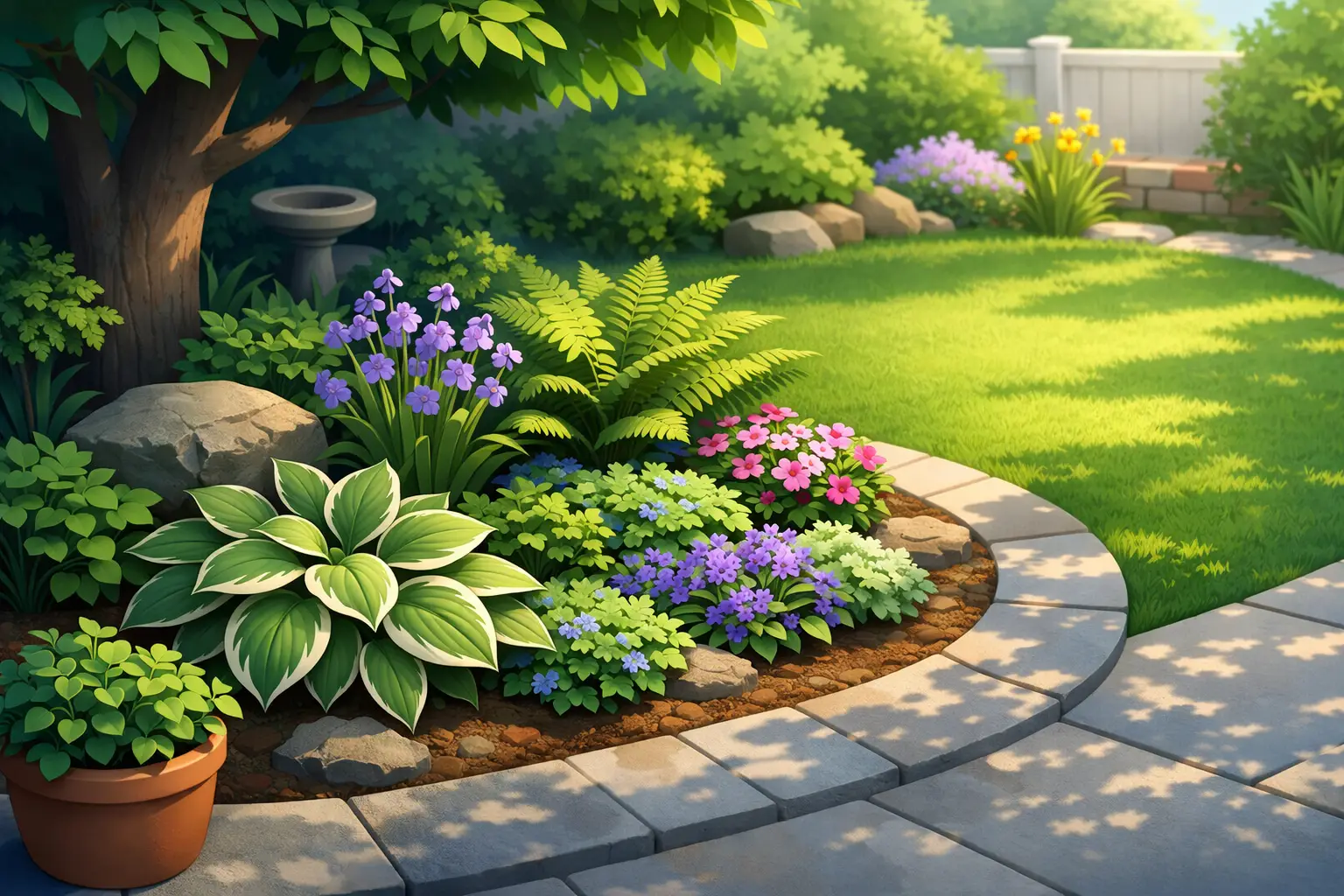
A shady yard is not a planting problem. It is a design condition - and a useful one when you choose plants for the light you actually have. If you are asking what plants grow in shade, the best answer starts with identifying whether your space gets dappled light, morning sun, or almost no direct sun at all. A plant labeled “shade tolerant” may survive in several conditions, but it will only look its best in the right one.
Shade gardens can feel cooler, calmer, and more layered than open, sunny beds. They also need a different strategy. Instead of relying on nonstop blooms, build interest with leaf shape, texture, color, and seasonal structure.
Start by measuring your kind of shade
“Shade” covers several very different growing environments. Before buying plants, watch the bed for a day or use a simple light-tracking tool. The amount and timing of sun will narrow your choices quickly.
Full shade receives fewer than four hours of direct sunlight, often with little or no midday sun. This is common on the north side of a house, beneath dense evergreens, or in narrow side yards. Full shade does not mean total darkness. Plants still need ambient light to grow.
Part shade generally means two to six hours of direct sun, usually in the morning. This is one of the most flexible conditions for planting because gentle early sun supports flowering without the stress of hot afternoon exposure.
Dappled shade occurs under deciduous trees, where light moves through leaves throughout the day. It can be ideal for woodland-style plants, although tree roots create extra competition for water and nutrients.
Deep shade is the toughest condition. Think of the base of a dense spruce, a covered porch, or a gap between buildings. In deep shade, reduce expectations for flowers and focus on foliage, containers, hardscape, or a smaller number of highly adapted plants.
What plants grow in shade? Start with reliable perennials
Perennials give shaded beds their backbone. Many return each year and create a fuller look as they mature, but check the mature spread before planting. A small nursery pot can become a large clump within a few seasons.
Hostas are a classic for good reason. Their leaves come in blue-green, chartreuse, gold, white-edged, and heavily textured varieties. They thrive in part to full shade with consistently moist, well-drained soil. The trade-off is that deer and slugs often find them just as appealing as homeowners do.
Ferns bring movement and a natural woodland feel. Autumn fern, Japanese painted fern, lady fern, and holly fern are strong choices, depending on your climate and soil moisture. Their fine texture is especially valuable beside broad-leaved hostas or heucheras.
Heuchera, often called coral bells, delivers colorful foliage in shades of lime, bronze, plum, peach, and near-black. Most varieties perform best in part shade, particularly where they get morning sun. In hot regions, protect them from intense afternoon light.
Hellebores are a smart option for homeowners who want early flowers. Their nodding blooms appear in late winter or early spring, when much of the garden is still quiet. They prefer shade or filtered sun and establish best in soil enriched with organic matter.
Astilbe adds soft, feathery flower plumes in white, pink, red, and lavender. It works well in moist part shade but can struggle in dry soil. If your shade bed is under mature trees, astilbe may need supplemental water during hot spells.
Other dependable choices include brunnera, lungwort, epimedium, hardy geranium, Japanese forest grass, and toad lily. Mixing a few of these plants creates contrast without making the bed feel busy.
Add shrubs for year-round structure
Perennials alone can leave a shade garden flat in winter. Shrubs provide height, evergreen presence, and a more finished foundation around patios, walkways, and home exteriors.
Oakleaf hydrangea is a standout for part shade. It produces large white summer flowers, handsome oak-shaped leaves, and excellent fall color. It needs room to grow, so it is better for larger borders than narrow foundation beds. Smooth hydrangeas can also work in part shade, especially in areas with reliable moisture.
For evergreen structure, consider Japanese pieris, certain camellias, aucuba, or shade-tolerant varieties of boxwood. Their success depends heavily on region. Camellias are excellent in many warmer climates but are not a universal choice across the United States.
Virginia sweetspire is another practical native-friendly option for moist to average soil. It handles part shade, develops fragrant white flower spikes, and turns red to burgundy in fall. In smaller spaces, look for compact cultivars rather than planting a full-size selection too close to a path.
Use ground covers where grass will not cooperate
Trying to force turf grass beneath trees is one of the most common shade-garden mistakes. Grass needs more light than most people realize, and tree roots compete for every drop of water. A ground cover or mulched planting bed is usually the more durable solution.
For dry shade, epimedium, barrenwort, sweet woodruff, and some sedges can be useful, though each has different moisture needs and regional performance. For moist shade, wild ginger, foamflower, ajuga, and moss can create a dense, low layer.
Pachysandra has long been used in shaded landscapes, but it is not the best fit everywhere. Japanese pachysandra can spread aggressively and may develop disease issues in humid conditions. Native alternatives, including Allegheny spurge in its suitable range, can offer a better ecological fit. Always check whether a ground cover is invasive or problematic in your state before using it widely.
Mulch is often the right answer, too. In a deeply shaded, root-filled area, a clean layer of shredded bark mulch with a few well-spaced ferns or containers may look better and require less maintenance than a carpet of struggling plants.
Shade plants for color, flowers, and food
A shade garden does not have to be all green. It just needs realistic expectations. Flowering tends to be strongest in part shade or dappled light, while full shade favors foliage.
Begonias, impatiens, coleus, caladiums, and torenia are strong annual choices for summer color. Coleus and caladium are primarily foliage plants, but their color can be more dramatic than many flowers. Impatiens work beautifully in shade, although choosing disease-resistant varieties helps avoid problems with downy mildew.
For edible gardens, leafy greens are the clear winners. Lettuce, spinach, arugula, kale, Swiss chard, cilantro, parsley, and mint can grow with limited sun, particularly in the heat of summer. They may grow more slowly than plants in full sun, but shade can delay bolting and keep leaves tender longer.
Fruit-producing crops are different. Tomatoes, peppers, squash, cucumbers, and most berries need substantially more sun for reliable production. If your yard has only a bright shaded spot, reserve it for herbs and greens rather than expecting a heavy tomato harvest.
Planting under trees takes a different plan
Shade beneath trees is not simply shade. It is often dry, root-packed soil with falling leaves and uneven rainfall. Even shade-tolerant plants need help getting established there.
Avoid cutting or removing major tree roots to make planting holes. Instead, plant smaller containers between roots, use a hand trowel, and spread a modest layer of compost over the surface. Do not pile soil or mulch against the tree trunk. A mulch ring should stay a few inches away from the bark.
Water new plants deeply and consistently during their first growing season. Once established, choose plants matched to the available moisture rather than trying to maintain water-hungry varieties in a dry root zone. This is where plant placement matters more than plant labels.
Design a shade bed with layers, not rows
A well-planned shade bed usually works best in three heights: shrubs or taller perennials in back, medium mounds through the center, and ground covers at the edge. Repeat a few plants instead of buying one of everything. Repetition makes a small yard look intentional and gives the eye a clear pattern to follow.
Use foliage contrast as your main design tool. Pair the broad leaves of hostas with fern fronds, thread Japanese forest grass between darker heucheras, or use silver-marked brunnera to brighten a dim corner. White flowers and light-colored foliage can make shade feel brighter, but too much white can look scattered. Group it in a few visible pockets.
Before planting, check USDA hardiness zone, mature size, deer pressure, soil drainage, and moisture. A beautiful plant in the wrong spot becomes an expensive replacement project.
Shade is an opportunity to design with more intention. Map the light, choose plants for the conditions you have, and give each layer room to mature. If you want help visualizing a planting layout before digging, Backyard Buddy can turn those real-yard details into a clearer starting plan.