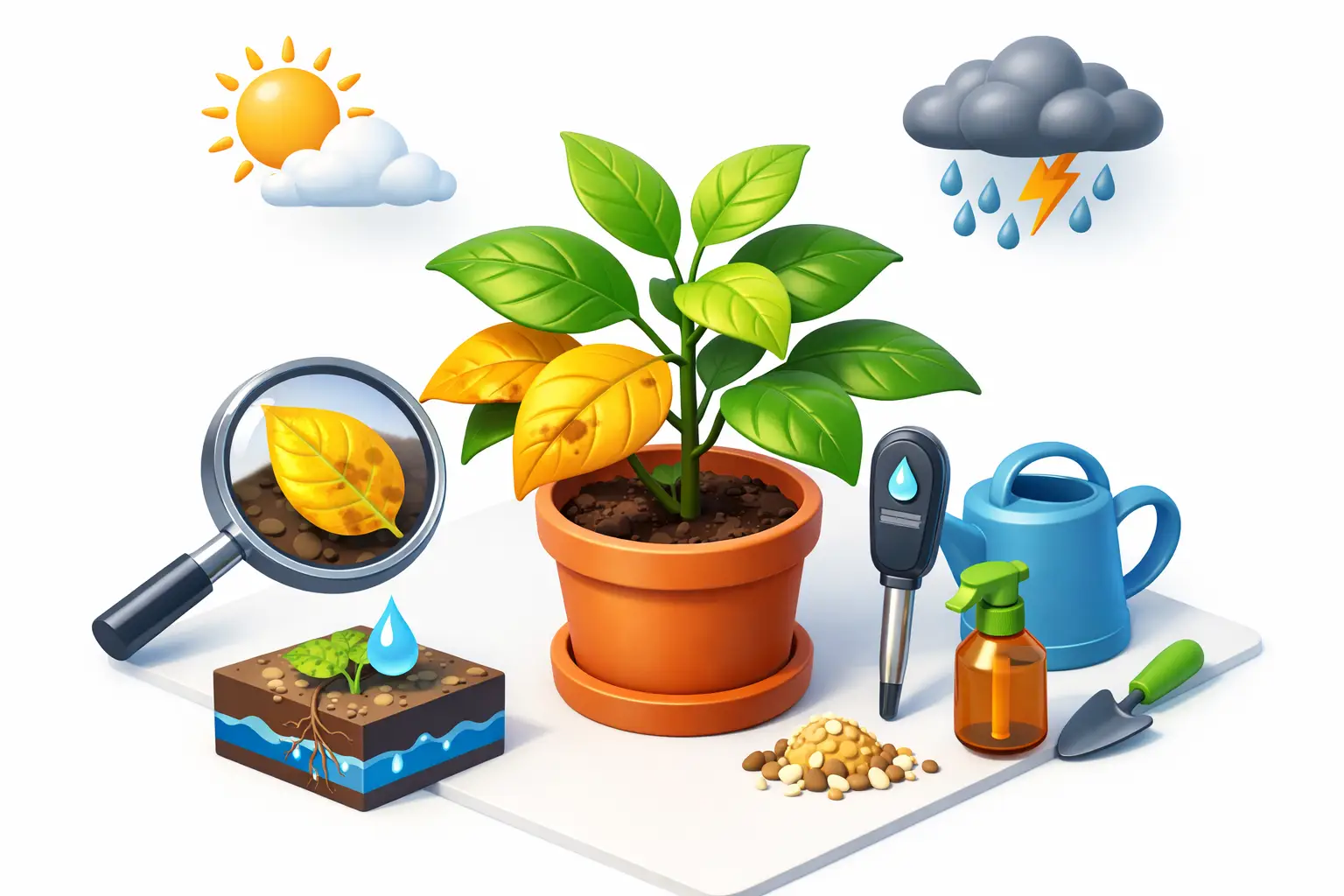
You water your plant, give it sunlight, and then one morning the leaves look washed out, pale, or fully yellow. If you're asking, "why are my leaves yellow," the good news is that yellowing leaves are usually a readable signal, not a mystery. Plants show stress in patterns, and once you know what to look for, you can narrow the cause fast.
Yellow leaves are not one single problem. They can point to watering issues, nutrient imbalance, poor drainage, root stress, pests, disease, temperature swings, or simple aging. The key is not to react to the color alone. You need to look at where the yellowing starts, how quickly it spreads, and what else the plant is doing.
Why are my leaves yellow? Start with the pattern
Before you add fertilizer or grab the hose, pause and inspect the plant closely. A few details can save you from treating the wrong problem.
If the oldest leaves at the bottom are turning yellow first, that often suggests normal aging, nitrogen deficiency, or a watering issue. If newer leaves are yellowing while older leaves stay green, think iron deficiency, root damage, or pH-related nutrient lockout. If the whole plant looks limp and yellow, watering and drainage usually deserve the first look. If leaves are yellow with spots, holes, or sticky residue, pests or disease may be involved.
Yellow edges tell a different story than yellow veins. Interveinal chlorosis - where the tissue turns yellow but veins stay green - often points to nutrient uptake problems, especially iron or magnesium. Uniform yellowing across the whole leaf is more often tied to water stress or general nutrient shortage.
That pattern matters because plants rarely fail quietly. They leave clues.
The most common reason leaves turn yellow
Overwatering is the most common cause of yellow leaves in both houseplants and landscape plants. It sounds backward because yellow leaves can make a plant look dry, but roots need oxygen as much as they need moisture. When soil stays soggy, roots struggle, rot can begin, and the plant loses its ability to take up water and nutrients.
An overwatered plant usually shows yellowing leaves that feel soft, sometimes paired with drooping stems and consistently wet soil. In containers, you may also notice a sour smell or fungus gnats hovering nearby. Outdoors, poor drainage can create the same effect even if you are not watering much. Heavy clay soil, a low spot in the yard, or compacted ground can keep roots too wet.
Underwatering can also turn leaves yellow, but the texture is usually different. Drought-stressed leaves often look dry, crisp, curled, or scorched at the edges. The soil pulls away from the container edge or feels dry several inches down. A plant that cycles between very dry and very wet can yellow from stress alone.
The fix depends on the cause. If soil is soaked, let it dry to the appropriate level for that plant before watering again. Check drainage holes, saucers, and soil type. If soil is bone dry, water deeply and evenly, then adjust to a more consistent schedule. The goal is not more water or less water by default. It is the right moisture level for that specific plant.
Nutrient problems can look similar
Plants that lack nutrients often yellow gradually rather than collapsing all at once. Nitrogen deficiency usually shows up in older leaves first because the plant moves nitrogen to new growth. The older leaves fade to light green, then yellow.
Iron deficiency usually affects newer leaves first. The leaf tissue turns yellow while the veins stay greener. This is especially common when soil pH is too high, because the nutrient may be present in the soil but unavailable to the plant. That is a key difference. Sometimes the issue is not missing fertilizer. It is locked-out nutrition.
Magnesium deficiency can also cause yellowing between veins, often on older leaves. Potassium issues may show as yellowing or browning at the leaf margins. The challenge is that several deficiencies overlap visually, which is why guessing can waste time.
If your plant has been in the same potting mix for a long time or your landscape soil has never been tested, a nutrient issue is worth considering. But avoid the common mistake of throwing fertilizer at a stressed plant without checking water and roots first. Fertilizer does not fix root rot, and too much can make stress worse.
Soil and roots may be the real problem
If watering seems fine and fertilizer has not helped, the root zone deserves attention. Plants can yellow because roots are crowded, damaged, buried too deeply, or growing in poor soil conditions.
In containers, root-bound plants often struggle to absorb water evenly. You water, but moisture runs down the sides or through the pot while tight roots stay dry in the center. The top may look moist while the plant still acts thirsty. In the ground, compacted soil can limit both oxygen and root expansion. New installs are especially vulnerable if the planting hole was poorly prepared or the root flare ended up below grade.
Transplant shock is another common reason for yellow leaves. A recently planted shrub, tree, or perennial may yellow while adjusting to heat, root disturbance, and a new watering pattern. That does not always mean the plant is failing. It means it is stressed. The right response is usually consistency, not panic.
When roots are the issue, improvement takes time. You may need better drainage, a larger container, gentler watering, or in some cases replanting at the correct depth.
Sunlight, temperature, and weather stress
Not every yellow leaf is about soil. Light and temperature can push plants into stress fast.
Too much direct sun can bleach leaves, especially on shade-loving plants or newly moved plants that were not hardened off. The yellowing may be paired with white patches, crispy areas, or scorched edges. Too little light can also cause yellowing, usually with stretched growth and smaller leaves.
Temperature swings matter too. A late cold snap can yellow tender growth overnight. Extreme heat can overwhelm roots and accelerate moisture loss, especially in dark containers and paved areas that radiate heat back onto the plant.
Outdoor plants often show weather stress unevenly. The side facing reflected heat, wind, or harsh afternoon sun may yellow first. That kind of localized damage is a clue that the environment, not the whole plant system, is under pressure.
Pests and disease can mimic other issues
When yellow leaves come with speckling, stippling, spots, webbing, residue, or distortion, inspect for pests and disease before changing fertilizer or irrigation. Spider mites, aphids, whiteflies, scale, and leafhoppers all interfere with plant health and can trigger yellowing.
Fungal and bacterial issues can also start as yellow patches or halos before turning brown. If leaves are spotted rather than uniformly pale, disease becomes more likely. Wet foliage, crowded planting, and poor air circulation raise the risk.
This is one area where close-up diagnosis really helps. A pest problem and a nutrient problem can look surprisingly similar from a few feet away. Up close, the signs are much clearer.
When yellow leaves are normal
Sometimes the answer to "why are my leaves yellow" is simply age. Plants do shed older leaves. Seasonal drop, especially on lower interior foliage, can be normal if the rest of the plant looks healthy and new growth is strong.
Deciduous plants yellow in fall by design. Evergreens also shed older needles and leaves over time. Even annuals nearing the end of their lifecycle will naturally fade. The difference is scale. A few aging leaves are normal. Rapid, widespread yellowing is not.
How to figure out the cause without guessing
Start with the basics. Check soil moisture several inches down, not just at the surface. Look at which leaves are yellowing first - old or new. Inspect the undersides of leaves for pests. Notice whether the yellowing is uniform, between veins, or concentrated at edges. Think about what changed recently, including weather, watering frequency, fertilizer, repotting, or a move to a new location.
If the plant is in a container, slide it out and inspect the roots if possible. Healthy roots are usually firm and light-colored. Dark, mushy roots suggest rot. Dense circling roots suggest crowding. In the landscape, check drainage after watering or rain. If water sits, roots may be suffocating.
This is where a smart diagnostic tool can save time. Backyard Buddy's Plant ER feature is built for exactly this kind of troubleshooting - matching visible symptoms to likely causes so you can act with more confidence instead of trial and error.
What to do next if leaves are already yellow
Yellow tissue usually does not turn green again, so focus on correcting the cause and protecting new growth. Remove badly damaged leaves if they are spent or diseased, but do not strip the plant bare. It still needs healthy foliage to recover.
Then make one targeted correction at a time. Adjust watering. Improve drainage. Move the plant if light is wrong. Treat pests if they are present. Use the right fertilizer only when a nutrient issue is likely. If you change five things at once, you will not know what helped.
Plants recover on their own timeline. Some bounce back in a week. Others need a full growth cycle to show real improvement. What matters is whether new leaves come in healthy.
A yellow leaf is not your plant being difficult. It is feedback. Read the pattern, fix the root cause, and let the plant tell you what happens next.